Can You Drive After Windshield Replacement? Safe-Drive-Away Time Explained
Author: Juan Cerna
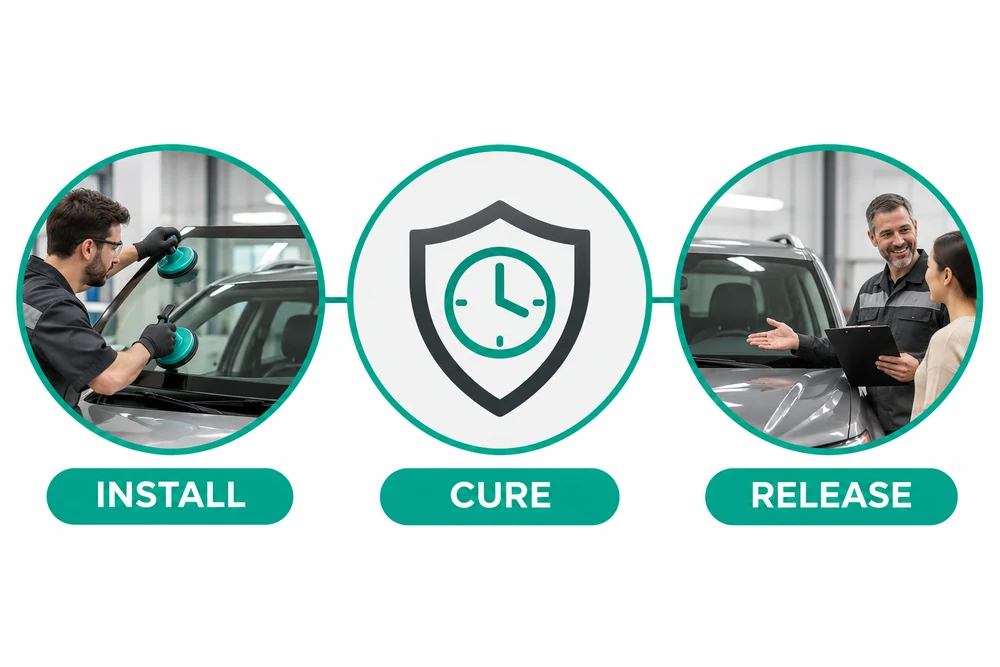
Quick answer: Do not drive immediately after a bonded windshield replacement unless the installer confirms that the minimum safe-drive-away time has been reached. This is the time needed for the adhesive system to develop the strength required for the vehicle to be released. It is not identical for every car or glass adhesive. Temperature, humidity, product instructions and installation conditions can affect it. Ask the installer for the specific release time before leaving.
A new windshield often looks ready as soon as the trim is reinstalled. But its bond is part of the vehicle's safety system. This is especially important when the glass supports occupant retention or interacts with airbag deployment. Finishing the visible installation and completing the adhesive's required drive-away period are two separate events.
What is minimum safe-drive-away time?
The Auto Glass Safety Council defines the waiting period as the minimum time a vehicle must remain stationary after glass installation so the adhesive achieves adequate bonding strength for release. Its minimum drive-away time guidance stresses that the installer must provide the correct time for the specific replacement.
It is tempting to look for a single answer such as “one hour.” That number might appear in an adhesive product's instructions under specific conditions, but it cannot be used for all installations. A product that performs one way in a warm workshop may have different documented requirements in colder or more humid conditions.
Practical rule: Follow the release time supplied by the installer for that adhesive and job. If the installer has not confirmed it, do not assume the vehicle is ready to drive.
Why does the windshield bond matter after a collision?
A properly installed windshield does more than block wind and rain. Depending on vehicle design, the bonded glass contributes to the way the vehicle manages certain loads and supports occupant restraint functions. If it is moved too early, the adhesive may not yet have the performance required by its manufacturer.
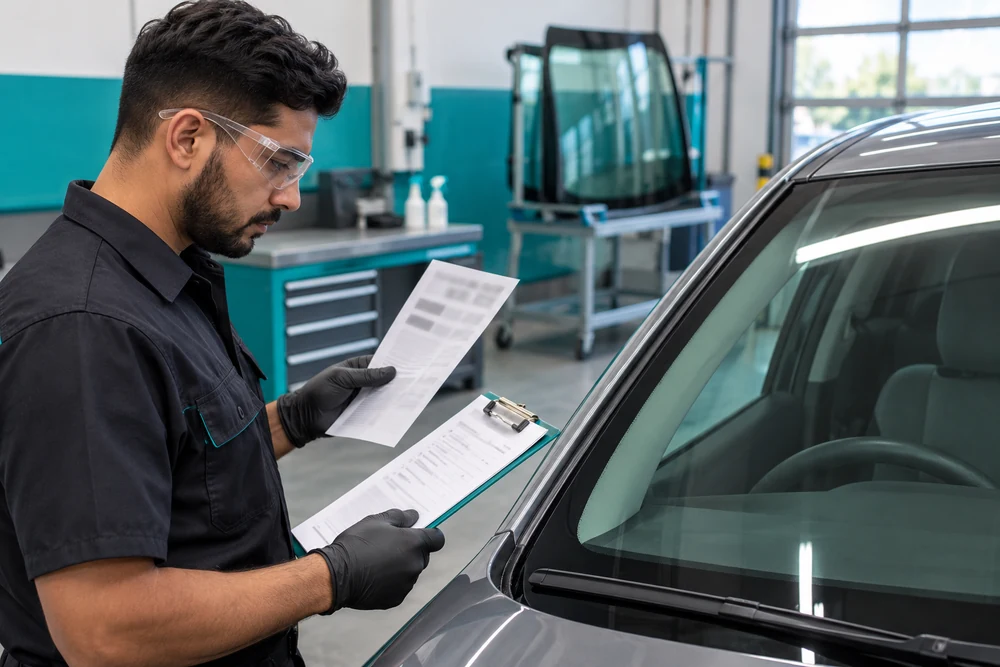
That is why a windshield replacement is not simply a matter of swapping one sheet of glass for another. Preparation of the bonding surface, adhesive selection, application conditions, glass placement and documented release time all matter.
A qualified installer should use the appropriate vehicle and adhesive procedures, including any requirements for mouldings, trim and related equipment.
What can change the required waiting period?
Factor
Why it matters
Adhesive product
Different formulas have different validated release conditions
Temperature and humidity
Environmental conditions influence how some adhesives develop strength
Vehicle requirements
Glass and occupant-restraint design can affect installation specifications
Installation process
Surface preparation and product handling must follow instructions
Additional equipment
Cameras, sensors or trim may require separate procedures
The time to drive away is also different from the time until an adhesive is fully cured in every respect. Do not use the phrase “fully cured” as a substitute for the specific safe-release requirement.
Is driving permitted once the installer releases the car?
Once the installer confirms the minimum safe-drive-away period and all required work is complete, follow their remaining aftercare instructions. They may provide advice about cleaning, water pressure, trim or other product-specific restrictions. Ask for written instructions when available.
If you notice unusual wind noise, water intrusion, loose trim or a safety warning afterward, contact the installer. Do not attempt to seal the glass perimeter with a household product. A leak or fit problem needs proper assessment, and some repairs require addressing the original installation rather than adding sealant.
Does windshield replacement also require camera calibration?
It can. Many newer vehicles have a forward-facing camera near the rearview mirror. Depending on the manufacturer, replacing the windshield may require calibration so the system has the correct reference after the glass is changed.
ICBC's glass-claim ADAS calibration guidance notes that OEM instructions may call for static, dynamic or combined calibration. This is a separate requirement from the adhesive's safe-drive-away time. A car should not be considered fully ready solely because one of those tasks has been completed.
Ask these two distinct questions: “Has the adhesive reached its minimum drive-away time?” and “Were all required camera or safety-system procedures completed?”
What about ICBC glass coverage in British Columbia?
ICBC explains that eligible glass claims under Comprehensive coverage may include repair or replacement, with deductibles and facility processes that differ by claim and service. It also explains that an ICBC-approved Glass Repair Program facility can process certain claims directly. See ICBC's glass and windshield claim information for current rules.
Do not assume that every collision repair business is separately enrolled in ICBC's glass program. Confirm the facility's status and how your own claim will be handled before booking. Cerna Collision advertises windshield chip repair and replacement in Surrey and can explain its glass-assessment process.
Questions to ask before collecting your vehicle
- Which adhesive system was used, and what is the required release time under today's conditions?
- At what time will the vehicle be ready to drive?
- Are there restrictions on washing, pressure or trim during the next period?
- Is a windshield-mounted camera present, and does the manufacturer require calibration?
- If I hear wind noise or find a leak, who should review the installation?
If your windshield was damaged during a larger accident, other panels, mounting surfaces or nearby systems may also need a separate collision body assessment. A glass repair does not replace inspection of unrelated crash damage.
Common questions about driving after windshield replacement
Is it always safe to drive one hour after replacement?
No. The correct time comes from the actual adhesive system and conditions of the installation. Use the installer's stated release time, not a generic number found online.
Can cold or wet BC weather affect the adhesive?
Environmental conditions can matter to some adhesive products. A qualified installer should follow the specified requirements for the product used in those conditions.
Does a new windshield always need ADAS calibration?
Not every vehicle has the same camera equipment or requirements. The exact model and manufacturer procedures determine whether calibration or other setup is needed.
Can I drive if the windshield is installed but calibration is unfinished?
Do not assume it is safe. Ask the installer which driver-assistance systems are affected and follow the manufacturer's and repairer's directions. If required safety work remains incomplete, arrange a suitable completion plan before relying on those functions.
Wait for a confirmed release, not a guessed number
The right question is not “How quickly can any windshield be replaced?” but “When is this installation safe to drive?” For windshield damage in Surrey, request an estimate from Cerna Collision and ask about the installation, release and any camera-related requirements for your vehicle.
Table Of Contents