Car Door Won't Close After an Accident? What Uneven Gaps Mean
Author: Juan Cerna
Quick answer: If a car door suddenly needs a hard push, drops when opened, or will not latch after an accident, the impact may have moved its hinges, latch, striker or nearby body opening. A small dent does not rule out hidden damage. Do not drive if the door cannot latch securely. Have the affected area inspected before anyone tries to force it into position.
You might notice the problem while collecting your belongings after a parking-lot bump, or the next morning when the door makes a sound it never made before. In Surrey, where everyday trips can involve busy roads around King George Boulevard and Scott Road, it is tempting to dismiss a sticky door as a minor annoyance. But the way a door fits can tell you something about the damage behind it.
What does a misaligned car door look like?
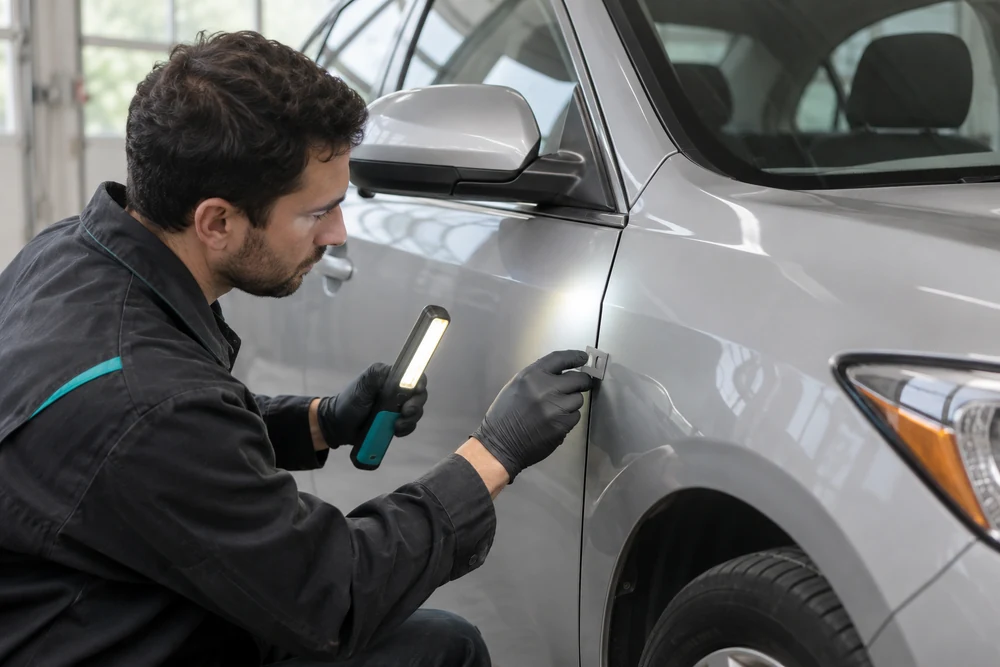
Look at the door from a safe position with the vehicle parked. Compare the gap around the damaged door with the matching door on the other side. You are not trying to make a repair; you are recording what changed.
What you notice
What a technician may investigate
Door will not latch without slamming
Latch, striker, door alignment or distorted surrounding metal
Rear edge sits higher or lower than before
Hinge, door shell or body-opening alignment
Top corner sticks out
Distorted door shell, seal pressure or damaged frame opening
Door rubs against a fender or quarter panel
Shifted adjacent panels or underlying mounting points
Wind noise or rain enters near the door
Uneven seal contact caused by a panel or door-position change
One symptom may have several causes. Visual inspection alone cannot tell you whether the solution is adjustment, a component replacement or a more involved body repair.
Why a small side impact can change the door fit
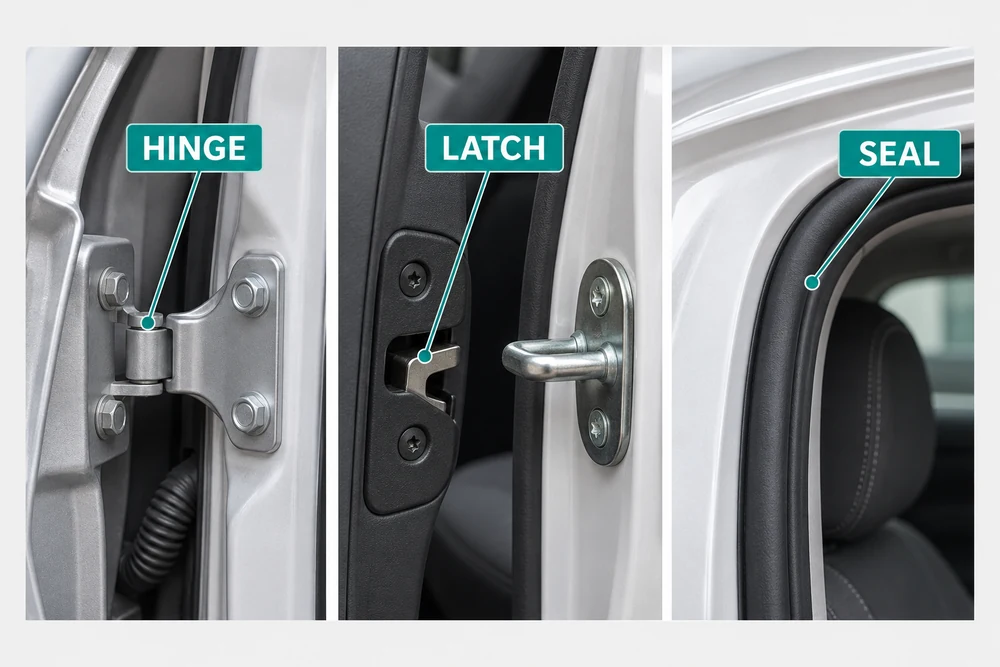
A door is not attached to an isolated panel. It swings on hinges connected to the vehicle's body structure and closes against a striker. Impact energy can travel through nearby metal even when the visible mark looks small.
Hinge and mounting damage. A bent hinge or mounting area can change the door's height or its travel path. On some newer vehicles, attachment points are not freely adjustable.
Latch and striker problems. The latch may no longer meet the striker at the correct angle. Repeatedly slamming the door can add damage rather than correct it.
Door-shell distortion. The door itself can twist, changing its fit at the top and bottom. A badly distorted shell may not be suitable for a simple adjustment.
Body-opening movement. Damage around a pillar, sill or adjacent panel can shift the opening. This is why a professional must inspect more than the latch when panel gaps suddenly change.
I-CAR notes that vehicle-specific body measurements and tolerances matter, especially when components have limited adjustment. See its guidance on repair tolerances.
Can you drive with a door that will not close properly?
If the door will not positively latch, do not drive the vehicle. A door that swings open can put occupants and other road users at risk. Arrange professional advice and towing if needed.
If it latches but the door sits proud of the body, scrapes when opened, or shows a new gap, that still deserves prompt attention. Do not assume it is safe just because a dashboard warning is absent. Avoid carrying passengers beside the affected door until its operation has been checked.
Before contacting a shop, take clear photos of the door closed, the gaps around it, any impact marks and the opposite side for comparison. Record whether the window, lock and interior handle work as expected. These details help a technician locate the problem.
How an auto body shop checks door damage
A proper assessment looks beyond the dent. Depending on the vehicle and the impact, the process may include:
- Documenting the impact area. The technician reviews visible damage, door operation and the reported accident direction.
- Comparing gaps and surfaces. The door is checked against nearby panels and relevant vehicle specifications.
- Inspecting hinges and latch parts. Mounting points, door edges, seals and fasteners are examined for distortion or damage.
- Checking the surrounding structure. Additional measurements or disassembly may be needed if the opening itself appears out of position.
- Planning and confirming the repair. The shop determines which parts can be restored under the manufacturer's procedures and verifies closing, locking, window operation and weather sealing afterward.
The approach is different from adjusting a door that has simply settled with age. After a collision, the source of the alignment problem needs to be identified first.
For a broader explanation of collision inspections, see Cerna Collision's auto body repair service in Surrey. If the impact involves a specific brand, manufacturer requirements may also influence the repair plan.
What if this happened during an ICBC claim?
Photograph the door issue and describe the change when your vehicle is assessed. A door that stopped closing properly immediately after the reported impact may need to be examined with the related collision damage. Coverage and repair authorization are determined through the claim process; the visible dent alone should not define what gets inspected.
If you have already opened a claim, bring the claim number and relevant photographs. Cerna Collision can explain the vehicle-repair side through its ICBC claim assistance service.
Common questions about doors after collisions
Can I fix a misaligned car door by loosening its hinges?
Do not try this after a crash. The hinge may not be the root cause, and changing its position can hide body-opening damage or make latching less reliable.
Does a wider door gap mean the car's frame is bent?
Not necessarily. It can come from a door shell, hinge or adjacent panel. Structural movement is one possibility that needs measurement, not a conclusion you can reach from a photo.
Will the shop have to replace the whole door?
Not always. Repair versus replacement depends on the damaged parts, material, severity and model-specific procedures. A technician can explain the recommended scope after inspection.
Why did the door start leaking after the accident?
A displaced seal or a changed door opening can prevent the weatherstripping from making full contact. The leak source should be confirmed before replacing seals at random.
Get a clear answer before forcing the door
A door that no longer fits is a useful warning sign, not just a cosmetic frustration. Cerna Collision is a family-owned Surrey body shop serving local drivers since 2001. If your door changed after an impact, request an estimate and describe the closing problem so the right areas can be assessed.
Table Of Contents