Parking Sensors Not Working After a Bumper Hit? What to Check
Author: Juan Cerna
Quick answer: Yes, a light bumper collision can affect parking sensors even when the bumper cover only has a small scuff. The impact may disturb a sensor, its holder, wiring or the area around it. Dirt and moisture can cause similar symptoms, so the right next step is a targeted inspection—not assuming the sensor itself needs replacing. If parking alerts have changed after a crash, have the bumper and related electronics checked.
You reverse into a space and the system beeps without an obstacle. Or the parking display suddenly says the feature is unavailable. If this began after a low-speed impact, a broken sensor is possible, but it is only one explanation. Newer vehicles often hide important components behind painted plastic, making a simple-looking bumper repair less simple than it appears.
Four parking-sensor symptoms worth documenting
Symptom after the collision
Possible inspection focus
Continuous beeping with no obstacle
Obstructed or mispositioned sensor; damaged mounting ring
One corner no longer detects objects
Individual sensor, connector, wiring or mounting position
System unavailable warning
Stored fault code, circuit issue or control-system problem
Alerts change after bumper removal or repainting
Sensor seating, approved paint limits or reassembly requirements
A sensor should not be tested by asking someone to stand directly behind a moving vehicle. Use a parked vehicle to record the warning message, and rely on professional diagnostic procedures for actual system testing.
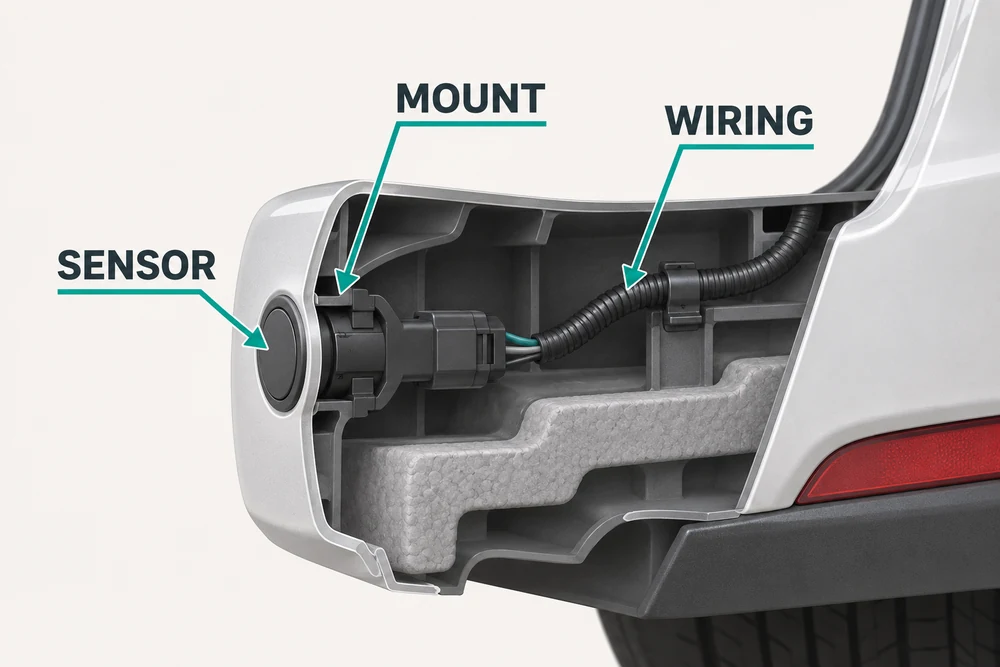
Why an impact can affect a sensor behind a bumper
Many parking-assistance systems use ultrasonic sensors mounted in the bumper cover. They rely on an unobstructed surface and a correct position. A slight change in angle, a damaged bracket or a loose electrical connector can interfere with normal operation.
But parking sensors are not the same as every ADAS component. Some vehicles also have radar behind the bumper or grille for functions such as blind-spot monitoring or automatic emergency braking. The devices may look similar to a driver, yet their diagnostic and calibration requirements differ.
There are several possible collision-related causes:
- A mounting tab breaks and allows a sensor to tilt.
- An impact pulls on a harness or connector without leaving an obvious crack.
- The bumper cover deforms around the sensor opening.
- A replacement or refinished cover does not meet a particular manufacturer's requirements.
- A separate radar, camera or control module records a fault that needs attention.
This is a reason to identify the exact equipment fitted to your year and trim. A Hyundai, Kia or other modern vehicle may have a different sensor layout even within the same model family.
Should you clean the sensor before booking an inspection?
You can gently remove visible mud, snow or dirt according to the owner's manual, then see whether the warning changes. Avoid abrasive tools, solvents or forceful pressure on the sensor face. If a warning started immediately after a hit, cleaning does not replace a collision assessment.
Do not depend on the parking feature until its operation has been checked. Continue to use mirrors and direct observation, and stop using the system as an aid if it behaves unpredictably.
If the bumper is loose, has sharp edges, rubs against a tyre or sits near damaged electrical parts, obtain guidance before driving. Sensor performance is not the only safety issue after an impact.
How a repair shop finds the actual problem
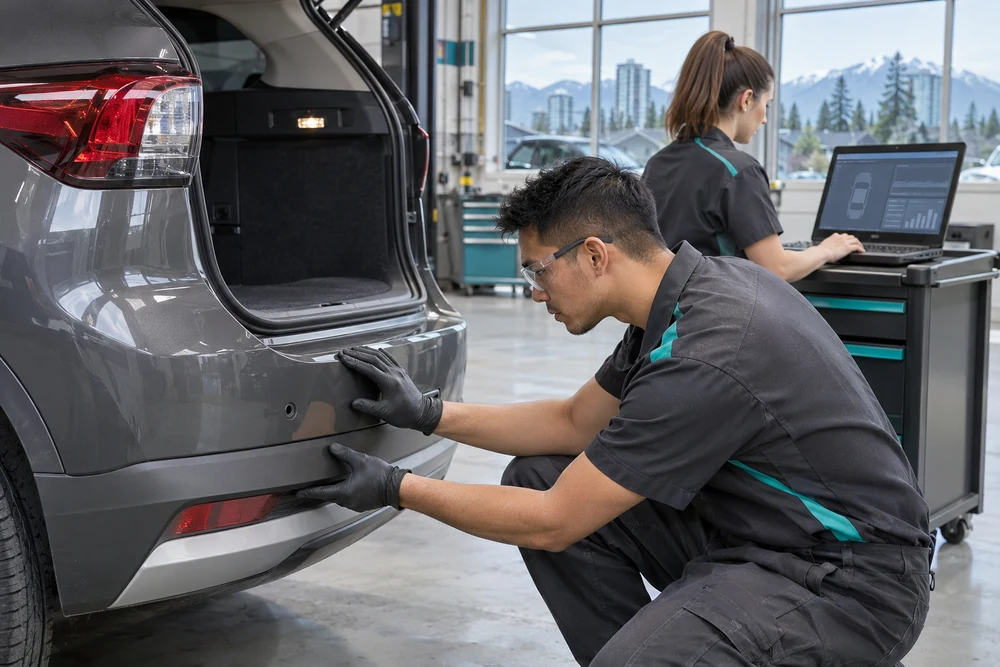
A technician should start with the vehicle's configuration and the damage location, rather than ordering a part from the first warning message.
- Document the symptoms. Note the side, warning text, and whether the problem started after the impact.
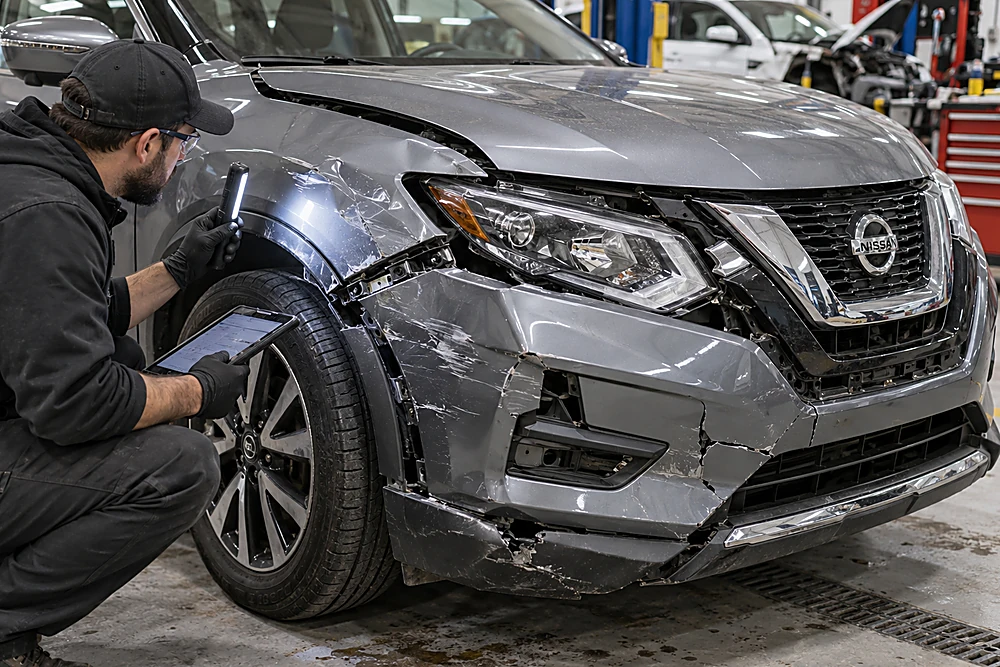
- Inspect the bumper cover and mounts. Look for distortion, broken tabs, shifted supports and impact evidence.
- Check connections and fault information. A suitable scan may help identify a circuit or module problem, but some physical faults require additional testing.
- Follow the repair procedure. Sensor removal, cover repair, painting and reassembly must respect the specific manufacturer's instructions.
- Verify the finished work. The repair team checks for remaining faults and any required setup, initialization or calibration.
ICBC explains that collision-claim vehicles with advanced driver-assistance systems may require OEM-prescribed calibration of cameras or radar units. That is not a statement that every ultrasonic parking sensor needs calibration. See ICBC's ADAS policy for collision claims for the distinction.
Does a diagnostic scan fix the parking sensor?
No. A scan can report trouble codes and help guide the next test. It does not straighten a bracket, repair a connector or guarantee a correctly aimed sensor. Likewise, clearing a warning without resolving its cause is not a completed collision repair.
For the wider body-repair process, Cerna Collision explains how it evaluates bumper and hidden collision damage. Cerna also describes its manufacturer-focused technical experience on its About page; the actual checks depend on the exact vehicle.
Common questions about parking sensors after an accident
Can a bumper sensor be damaged without a warning light?
Yes. A sensor may be mispositioned or detect obstacles incorrectly without creating a dashboard message. Note any change in behaviour, even if the display looks normal.
Does a repaired or repainted bumper affect parking sensors?
It can, depending on the sensor design, the paint system and manufacturer limits. A shop must follow the specific repair instructions rather than assuming every bumper cover can be refinished the same way.
Will ICBC pay for sensor diagnosis after a collision?
Coverage and authorization depend on the claim and evidence linking the issue to the incident. Document when the failure began and ask the repair facility to explain the diagnosis and any required approval.
Is a parking sensor repair the same as radar calibration?
No. Ultrasonic parking assistance, rear cross-traffic radar and forward collision systems can require different checks. The vehicle manufacturer determines when calibration or initialization is necessary.
Have the bumper checked before the warning becomes a guess
A visible scrape and a sensor fault may share a cause, or they may be unrelated. An inspection can establish the difference. If your parking alerts changed after a collision in Surrey, request an estimate from Cerna Collision and bring a photo of the warning message if possible.
Table Of Contents