Pre-Repair Scan vs. Post-Repair Scan: What Changes After a Crash?
Author: Juan Cerna
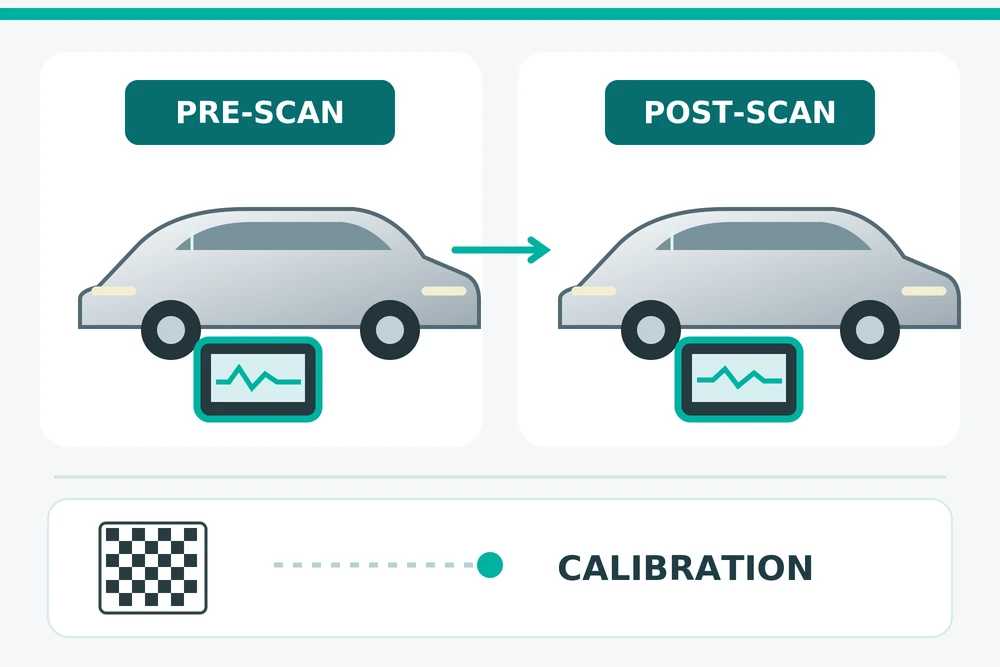
Quick answer: A pre-repair scan records diagnostic information before collision work begins; a post-repair scan checks electronic systems after repair and reassembly. Both can reveal faults that are not obvious from the dashboard. Neither scan, by itself, replaces physical inspection, troubleshooting or required ADAS calibration. The exact scanning procedures depend on your vehicle and the manufacturer's current instructions.
A modern car may leave a collision with only a damaged bumper cover, yet the electronics behind it can be more complicated than the dent. Cameras, radar, parking aids, restraint systems and control modules exchange information. That is why collision repair is not finished simply because the exterior paint looks right.
Pre-repair scan vs. post-repair scan at a glance
Question
Pre-repair scan
Post-repair scan
When does it happen?
Before repairs, or when it becomes safely possible
After repairs and relevant system work
Main purpose
Establish a record of available fault data
Check for faults remaining or introduced during repair
What might it find?
Diagnostic trouble codes and affected modules
Unresolved issues or codes after reassembly
Does it identify every fault?
No; some damage has no stored code
No; functional checks and procedures may still be needed
Is it calibration?
No
No
A scan produces evidence for the repair plan, not a blanket pass or fail for vehicle safety. Codes can relate to the crash, an older issue, a discharged battery or a component disconnected during repair. A trained person must interpret them in context.
What happens during a pre-repair scan?
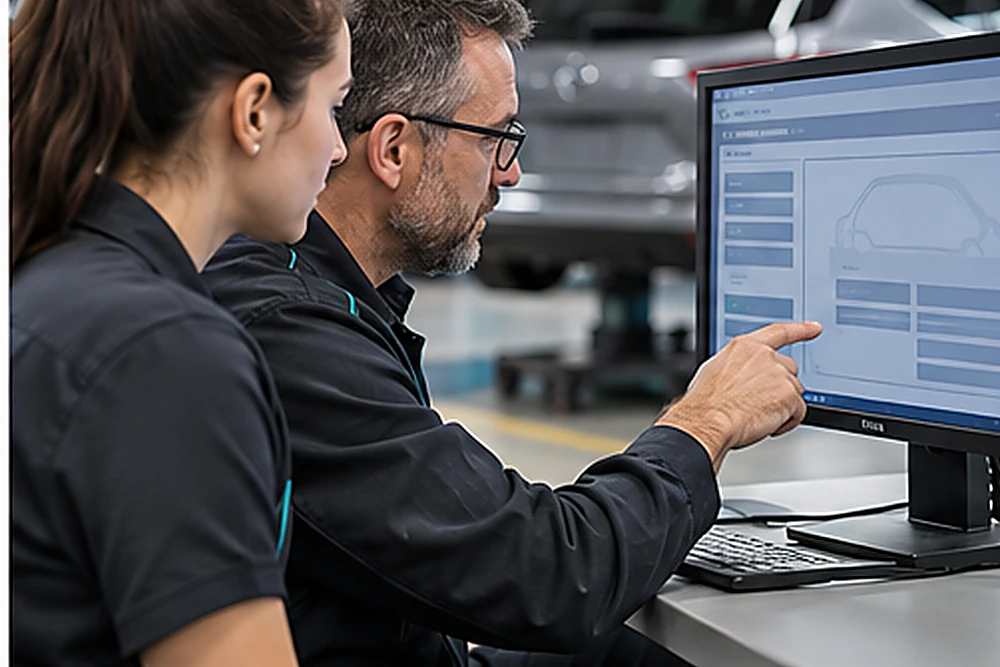
The technician connects suitable diagnostic equipment and records electronic information that the vehicle makes available. Some systems can have faults that do not illuminate a dashboard warning lamp. Others may have data that help distinguish a pre-existing condition from something that followed the collision.
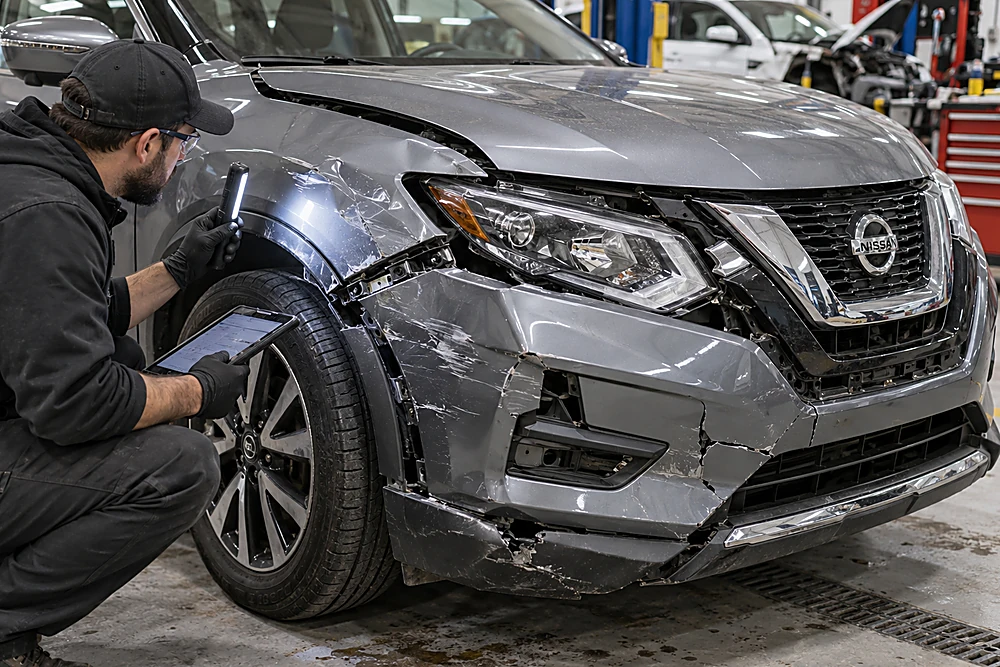
The information can change the repair plan. For example, a front-corner impact may also affect an electronic component behind the bumper. If a module is offline, that may call for physical wiring inspection or additional procedures before the estimate is complete.
A pre-scan is not always possible immediately. Severe electrical damage or an unstable 12-volt system can prevent communication, in which case the scan may need to be performed when safe access is restored.
I-CAR's guidance on pre- and post-repair system scanning explains why diagnostic information matters even when there is no warning light.
What is checked during the post-repair scan?
After repaired components are installed and connected, a post-scan helps the repair team confirm what the vehicle reports. If faults remain, the shop must follow the appropriate diagnostic process rather than simply clearing codes and returning the keys.
Depending on the model and repair, the job may also require system initialization, calibration, a functional test or a road test under specified conditions. A clear scan does not necessarily prove that a camera has the correct aim, a headlamp meets its target or a sensor bracket is positioned correctly.
Ask for the distinction: “Was the system scanned?” and “Were the manufacturer's required calibrations and functional checks completed?” are two different questions.
Scan vs. calibration: why drivers confuse them
A diagnostic scan communicates with electronic modules and reads available information. An ADAS calibration helps a sensor or camera establish the position or reference it needs to operate within the manufacturer's specification.
For example, the front bumper may need to be removed for body repair. Depending on the specific vehicle, work affecting a radar unit or its support could trigger a calibration requirement. In another vehicle, the same-looking repair might have different rules.
ICBC says OEM procedures may require camera or radar calibration following collision-related work and that the work may be done by the repair facility or arranged with another qualified provider. Its collision-claim ADAS policy is a useful reference. It does not mean that every bumper scratch automatically needs calibration.
What you should ask before approving collision diagnostics
Use these questions to understand the technical side without needing to become a technician:
- What equipment or systems are located near the damaged area?
- Does the vehicle manufacturer call for scans before and after this type of repair?
- Were any fault codes found, and were they related to the collision?
- Is calibration, initialization or a road test required separately?
- If specialized work is subcontracted, how will completion be documented?
A capable repair team should be able to explain which checks apply to your vehicle, why they matter and whether a claim requires further approval.
Cerna Collision describes diagnostic equipment on its About page and outlines its inspection, disassembly and quality-review steps in its Surrey collision-repair service. Ask the team how the specific model's electronic requirements will be addressed in your repair plan.
Do these scans affect an ICBC claim?
They may affect documentation and the scope of repair when supported by the vehicle manufacturer's instructions and the damage found. Do not assume the insurer approves every operation automatically. Keep your claim number, describe any warnings that appeared after the accident and ask how additional findings are submitted or reviewed.
For the separate administrative steps, Cerna Collision has an ICBC claim assistance page. This article focuses on what the scan does—not on how to open or settle a claim.
Common questions about collision diagnostic scans
Does every car need a pre-repair and post-repair scan?
Requirements vary by manufacturer, model, year, damage and repair operations. The shop should consult current OEM information rather than assume one rule covers every car.
Can a vehicle have faults with no warning lights?
Yes. Some diagnostic trouble codes or stored conditions may not trigger an immediate warning. A scan may help reveal them, but physical inspection is still important.
Can a scan detect a bent sensor bracket?
Not reliably by itself. A physical change can affect the way a system works without generating an obvious diagnostic code. Position and calibration checks are separate tasks.
If the post-scan is clear, is the repair complete?
Not necessarily. The vehicle may still need mechanical, structural, alignment, functional or calibration verification, depending on the completed work.
Understand the repair beyond the dashboard
Electronic diagnostics help explain what happened beneath the visible damage, but their value comes from using the results correctly. If your vehicle has been in a Surrey collision, request an estimate and ask what scans and related checks are appropriate for your year and model.
Table Of Contents